
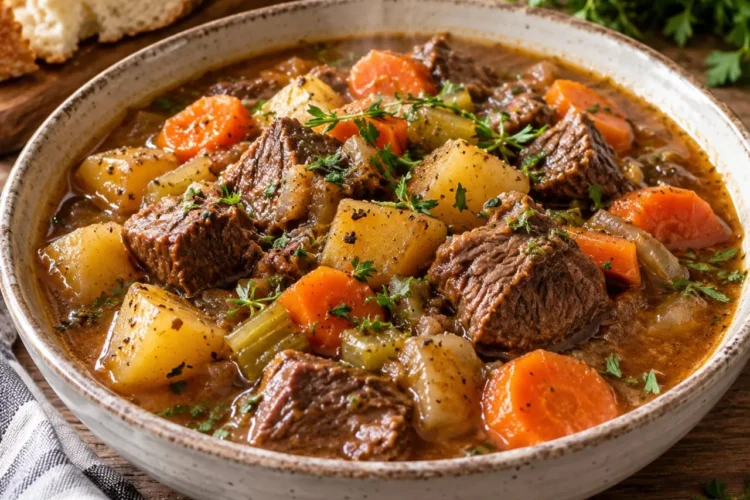
There is nothing quite like coming home to a warm bowl of homemade beef stew. This Easy Beef Stew Recipe combines tender chunks of beef, potatoes, carrots, celery, and onions in a rich, savory broth that slowly develops flavor while you go about your day.
Made in the slow cooker, this hearty dinner requires just a little preparation before the ingredients simmer together until the beef becomes fork-tender. A few simple techniques help create a deeper, more flavorful gravy without making the recipe complicated.
Whether you are planning a cozy family dinner or preparing meals ahead for a busy week, this slow cooker beef stew is a comforting classic worth keeping in your recipe collection.
Why You’ll Love This Easy Beef Stew Recipe
- Easy preparation: Prep the meat and vegetables, then let the slow cooker do most of the work.
- Tender beef: Slow cooking helps break down the connective tissue in suitable cuts of beef.
- Rich, savory gravy: Tomato paste, Worcestershire sauce, garlic, and beef broth build layers of flavor.
- A complete meal: Beef, potatoes, carrots, and celery make this a hearty one-pot dinner.
- Great for leftovers: The flavors continue to develop, making leftovers delicious the next day.
Ingredients You’ll Need
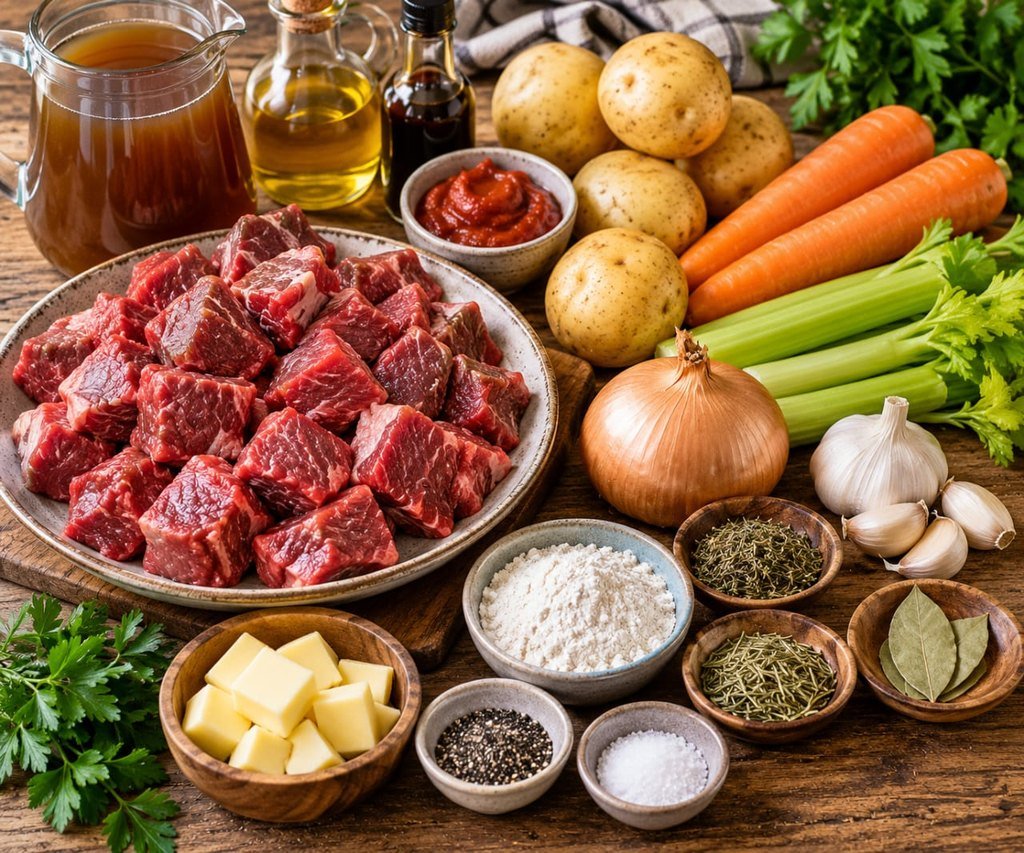
These everyday ingredients create a classic slow cooker beef stew with tender vegetables and a savory gravy.
For the Beef Stew
- 2 pounds (900 g) beef chuck roast or beef stew meat, cut into 1-inch cubes
- 1 ½ pounds (680 g) Yukon Gold or red potatoes, cut into bite-sized chunks
- 3 medium carrots, peeled and sliced
- 2 celery ribs, sliced
- 1 medium yellow onion, diced
- 4 garlic cloves, minced
- 2 tablespoons olive oil, for browning the beef
- 2 tablespoons tomato paste
- 3 cups (720 ml) low-sodium beef broth
- 1 tablespoon Worcestershire sauce
- 1 teaspoon dried thyme
- 1 teaspoon dried rosemary, crushed
- 2 bay leaves
- 1 teaspoon salt, or to taste
- ½ teaspoon freshly ground black pepper
For Thickening the Gravy
- 2 tablespoons all-purpose flour
- 2 tablespoons cold water
Alternatively, mix 1 tablespoon cornstarch with 1 tablespoon cold water for a gluten-free thickener. Check the labels on the broth and Worcestershire sauce if you need to avoid gluten.
What Is the Best Beef for Slow Cooker Beef Stew?
Beef chuck is an excellent choice because it contains connective tissue and marbling that soften during slow cooking. The result is flavorful beef that becomes tender after several hours in the slow cooker.
Pre-cut beef stew meat is convenient, but try to choose pieces of similar size. Avoid very lean cuts intended for quick cooking, as they may become dry or less tender during a long cooking period.
How to Make Easy Beef Stew in a Slow Cooker
Step 1: Prepare the Beef and Vegetables
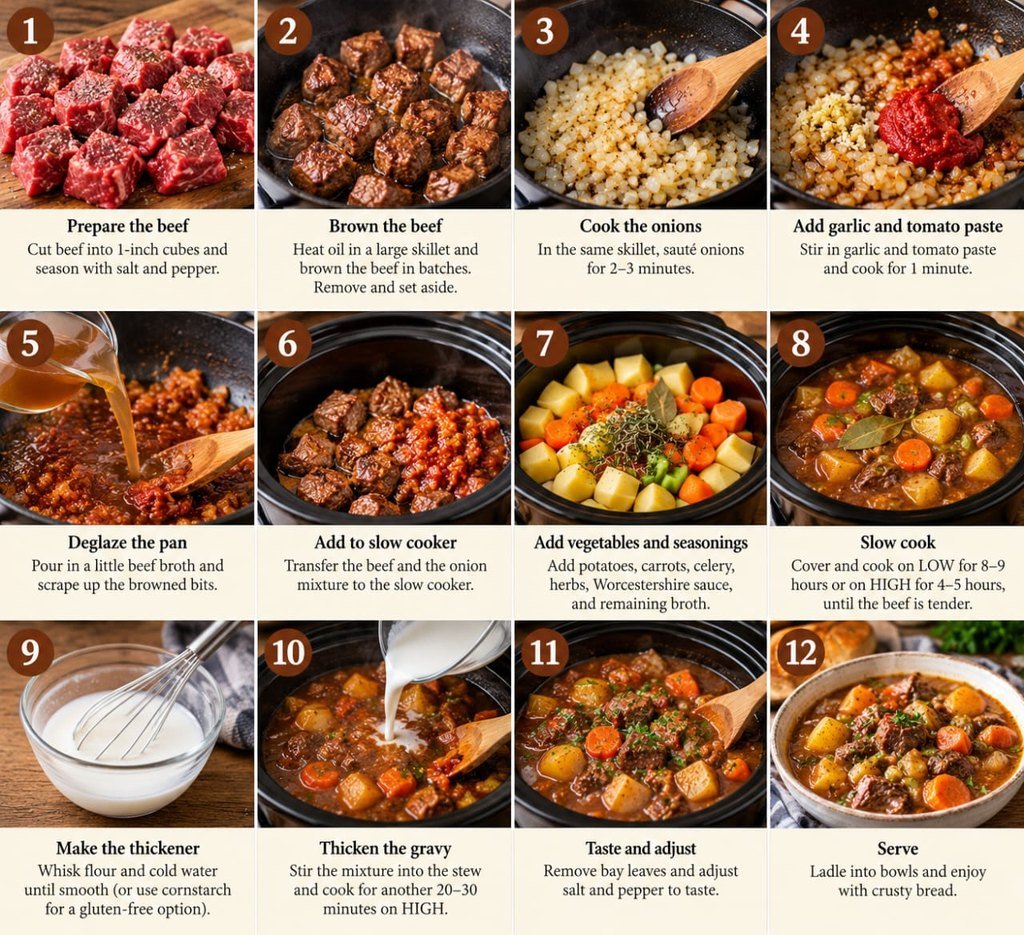
Pat the beef dry with paper towels and cut it into evenly sized cubes if needed. Season with salt and black pepper. Chop the potatoes, carrots, celery, and onion, and mince the garlic.
Step 2: Brown the Beef for Extra Flavor
Heat the olive oil in a large skillet over medium-high heat. Working in batches, brown the beef on several sides for about 2–3 minutes per batch. Avoid crowding the pan, because the meat will steam instead of browning properly.
Transfer the browned beef to the slow cooker. This step is optional, but it adds a deeper, roasted flavor to the finished stew.
Step 3: Sauté the Aromatics
Reduce the heat to medium. Add the onion to the same skillet and cook for 2–3 minutes, scraping up the browned bits. Stir in the garlic and tomato paste and cook for another 30–60 seconds.
Pour in a little of the beef broth and scrape the bottom of the skillet to release the remaining flavorful bits. Transfer this mixture to the slow cooker.
Step 4: Add the Vegetables and Seasonings
Add the potatoes, carrots, celery, thyme, rosemary, bay leaves, and Worcestershire sauce to the slow cooker. Pour in the remaining beef broth and stir gently to distribute the ingredients.
The broth does not need to completely cover every ingredient. The slow cooker retains moisture, and the vegetables will release some liquid as they cook.
Step 5: Slow Cook Until Tender
Cover and cook on LOW for 8–9 hours or on HIGH for approximately 4–5 hours. Cooking times vary by appliance and the size of the beef cubes.
The stew is ready when the beef is fork-tender and the potatoes and carrots are soft but still hold their shape. If the beef is still tough, continue cooking and check again later.
Step 6: Thicken the Gravy
About 20–30 minutes before serving, whisk the flour and cold water in a small bowl until smooth. Stir the mixture into the stew, cover, and cook on HIGH for another 20–30 minutes, until the gravy thickens.
For a cornstarch version, stir the cornstarch and cold water together until smooth before adding them to the stew. Do not add dry flour or cornstarch directly to the slow cooker, as lumps may form.
Step 7: Taste and Serve
Remove the bay leaves. Taste the stew and adjust the salt and pepper as needed. If the gravy is thicker than you prefer, stir in a little warm beef broth.
Ladle into bowls and serve hot with crusty bread, dinner rolls, or a simple green salad.
Tips for the Best Homemade Beef Stew
- Choose chuck beef: This cut is well suited to long, moist cooking.
- Brown in batches: Giving the beef room in the skillet helps develop a flavorful crust.
- Cut vegetables evenly: Similar-sized pieces cook more consistently.
- Keep the lid closed: Opening the slow cooker repeatedly releases heat and extends cooking time.
- Add thickener near the end: This gives you better control over the final gravy consistency.
- Remove the bay leaves: Take them out before serving.
- Allow enough cooking time: Beef that is still tough usually needs more time rather than a higher temperature at the end.
Easy Variations
Beef Stew with Mushrooms
Add 8 ounces of sliced mushrooms during the final 1–2 hours of cooking for an earthy flavor. For more intense browning, sauté them separately before adding them to the slow cooker.
Beef Stew with Peas
Stir in 1 cup of frozen peas during the last 15–20 minutes. Adding them near the end helps preserve their color and texture.
Gluten-Free Beef Stew
Use a gluten-free Worcestershire sauce and certified gluten-free beef broth. Thicken the gravy with cornstarch mixed with cold water instead of all-purpose flour.
Beef Stew Without Browning
If you need a simpler preparation, add the raw seasoned beef directly to the slow cooker. The stew will still cook, although browning the meat first generally produces a deeper, more roasted flavor.
Make It More Herbaceous
Add a few fresh thyme sprigs or a small amount of chopped parsley near the end of cooking. Start with a modest amount of herbs and adjust to taste.
What to Serve with Beef Stew
This slow cooker beef stew is hearty enough to serve on its own, but these sides are also excellent choices:
- Crusty bread or homemade dinner rolls
- Buttermilk biscuits
- A fresh green salad
- Steamed green beans
- Roasted broccoli
- Mashed potatoes if you prefer a lighter stew without potatoes in the pot
How to Store and Reheat Beef Stew
Refrigerator
Let the stew cool slightly, then transfer it to shallow, airtight containers. Refrigerate within 2 hours and use within 3–4 days.
Freezer
Freeze cooled stew in airtight freezer-safe containers for up to 3 months for best quality. Leave a little space at the top for expansion. Potatoes may become softer after thawing, but the stew will still be suitable for reheating.
Reheating
Reheat on the stovetop over medium-low heat, stirring occasionally, until the stew is steaming hot throughout. Add a splash of broth or water if the gravy has become too thick. You can also reheat individual portions in the microwave, stirring partway through.
Reheat leftovers to 165°F (74°C). Avoid repeatedly cooling and reheating the entire batch; warm only the portion you plan to eat.
Frequently Asked Questions
How long does beef stew take in a slow cooker?
As a general guide, cook on LOW for 8–9 hours or on HIGH for 4–5 hours. The exact time depends on the appliance, the size of the beef pieces, and the cut of meat. The beef should be fork-tender before serving.
Why is my slow cooker beef stew meat tough?
It may need more cooking time. Tough cuts such as chuck become tender as connective tissue breaks down during slow, moist cooking. Continue cooking and check periodically rather than serving the beef while it is still chewy.
How can I make beef stew gravy thicker?
Mix flour or cornstarch with cold water until smooth, then stir it into the stew near the end of cooking. Allow additional time for the gravy to thicken. You can also mash a few cooked potato pieces into the broth for a slightly thicker texture.
Can I put raw beef directly into the slow cooker?
Yes. Browning is an optional flavor-building step rather than a requirement for this recipe. If you skip it, season the beef well and follow the same slow-cooking instructions.
Should the beef be completely covered with broth?
No. A slow cooker traps moisture, and the vegetables release liquid as they cook. Follow the recipe’s broth quantity rather than adding enough liquid to submerge everything.
Can I prepare beef stew the night before?
Yes. Chop the vegetables and measure the seasonings ahead of time. Refrigerate prepared ingredients in covered containers. For food safety, keep raw beef separate from ready-to-eat foods and refrigerate promptly. Follow your slow cooker’s instructions for loading chilled ingredients.
Can I cook frozen beef in a slow cooker?
Do not put frozen beef directly into a slow cooker. Frozen meat may remain too long at temperatures that allow harmful bacteria to grow. Thaw beef safely in the refrigerator before preparing the recipe.
Final Thoughts
This Easy Beef Stew Recipe brings together tender beef, hearty vegetables, and a rich homemade gravy with the convenience of slow cooking. Browning the meat first adds extra depth, while a simple flour or cornstarch slurry helps create a satisfying, thick sauce.
Serve a steaming bowl with crusty bread or a fresh salad for a comforting family dinner. Save this recipe for a chilly evening when you want a hearty meal with minimal hands-on cooking.